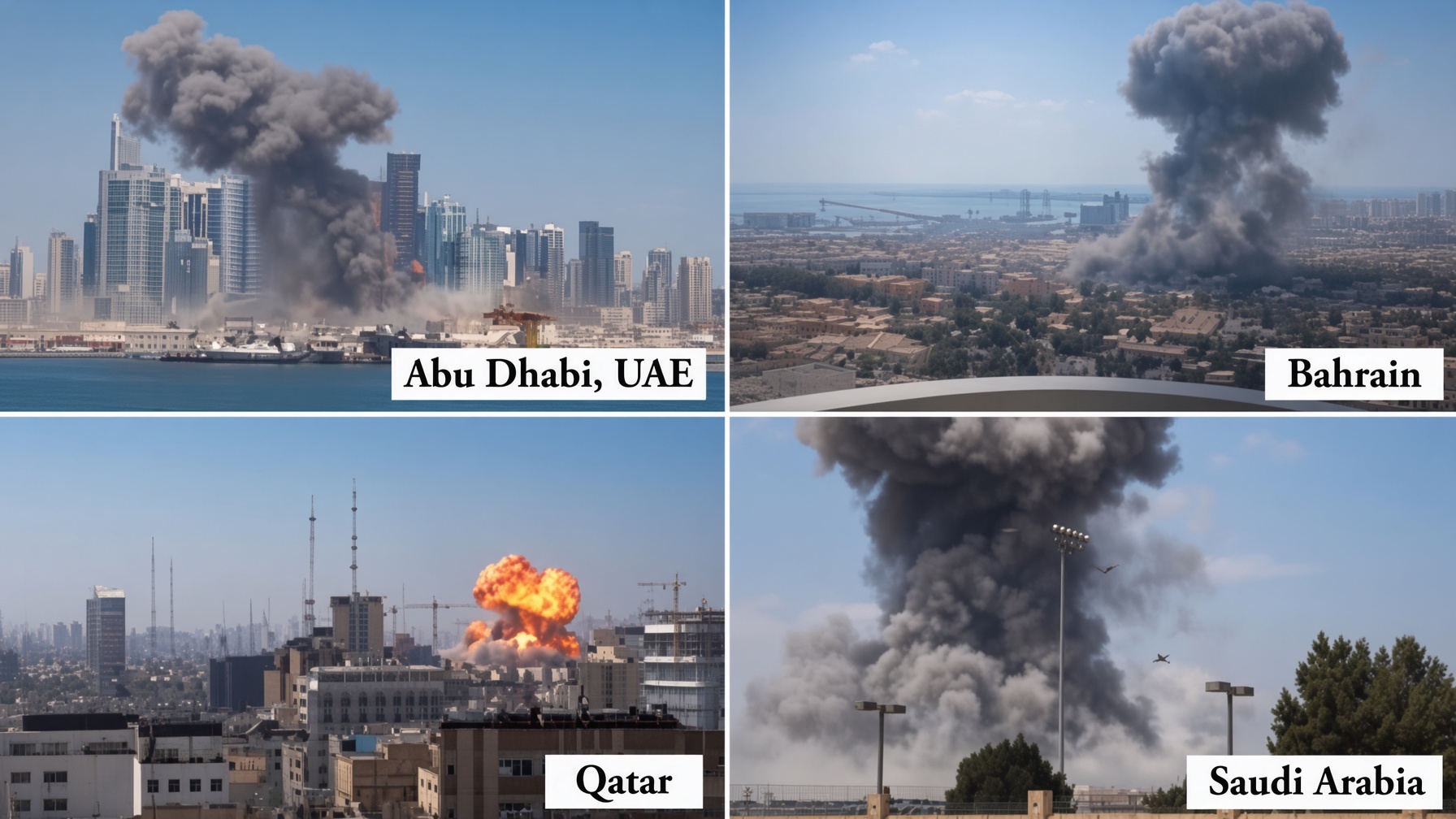
DUBAI — Tensions across the Persian Gulf have intensified following a new wave of Iranian missile and drone attacks targeting U.S. military positions and facilities in several countries across the region.
The latest escalation comes amid an ongoing military confrontation between Iran and the United States. Iranian officials have described the attacks as retaliation for U.S. strikes against Iranian targets, while Washington has warned Tehran against further attacks on American forces and regional partners. Reuters reported that U.S. and Iranian forces exchanged heavy missile and drone strikes in recent days, increasing concerns about the broader security situation in the Gulf.
Iranian state media and military officials have claimed that Iranian forces launched attacks against U.S. military facilities in several Gulf countries. Targets mentioned in Iranian statements have included Al Dhafra and Al Minhad in the United Arab Emirates, Al Udeid in Qatar and facilities associated with the U.S. Navy’s Fifth Fleet in Bahrain.
Reuters footage and reporting have documented Iranian claims involving several of these installations, although individual claims about damage have not always been independently confirmed.
Gulf States Raise Security Alerts
The reported attacks have placed governments across the Gulf on heightened alert.
Bahrain, which hosts the headquarters of the U.S. Navy’s Fifth Fleet, has experienced explosions and military activity during the wider conflict. The Fifth Fleet’s area of responsibility includes the Gulf, Red Sea, Arabian Sea and parts of the Indian Ocean, making Bahrain an important hub for U.S. military operations in the region.
Qatar has also faced repeated security concerns because it hosts Al Udeid Air Base, one of the largest U.S. military installations in the Middle East.
Iran has repeatedly claimed that it has targeted the base with missiles and drones. Qatari authorities have reported intercepting incoming threats during previous attacks, while regional air defenses have been placed on heightened readiness.
Kuwait has likewise reported military activity and explosions amid the regional confrontation, adding to concerns about the possibility of the conflict spreading further across Gulf territory.
Airspace and Aviation Disruptions
The escalating attacks have also affected civilian aviation.
Several Gulf states have imposed or adjusted airspace restrictions as governments assess the risk to commercial aircraft. The European Union Aviation Safety Agency has maintained warnings covering portions of the airspace and waters around Bahrain, Kuwait, Qatar and the United Arab Emirates because of the continuing military confrontation.
The restrictions have created additional disruption for airlines and travelers operating through one of the world’s busiest aviation regions.
Strait of Hormuz Remains a Major Concern
Beyond the immediate military threat, the conflict has raised renewed concerns about the Strait of Hormuz, a critical passage for global energy shipments.
Iran has previously threatened restrictions on shipping through the strategic waterway, while the United States has warned against actions that could interfere with commercial navigation. Reuters reported that the confrontation has already contributed to a sharp reduction in shipping through the strait and pushed oil prices higher.
Any prolonged disruption could have consequences far beyond the Middle East because the waterway is a major route for global oil and gas exports.
A Conflict With Wider Regional Risks
The latest exchange represents another significant escalation in a conflict that has already spread beyond Iran and the United States.
U.S. forces recently struck Iranian military targets on Larak Island after intelligence indicated that Iranian forces were preparing rocket launchers and sea mines near the Strait of Hormuz. Iran subsequently launched ballistic missiles toward U.S. military bases in Jordan, according to Reuters.
The developments have raised concerns that continued retaliation could draw additional countries and military forces into the confrontation.
For Gulf governments, the immediate priority remains protecting their populations, critical infrastructure and airspace while avoiding further escalation.
For the United States and Iran, however, the exchange of missile and drone attacks demonstrates how quickly military operations can expand across national borders.
With tensions remaining high and military forces across the region on alert, the situation remains fluid. Further strikes, diplomatic initiatives or changes to airspace and shipping restrictions could significantly affect the security and economic outlook for the entire Gulf region.