
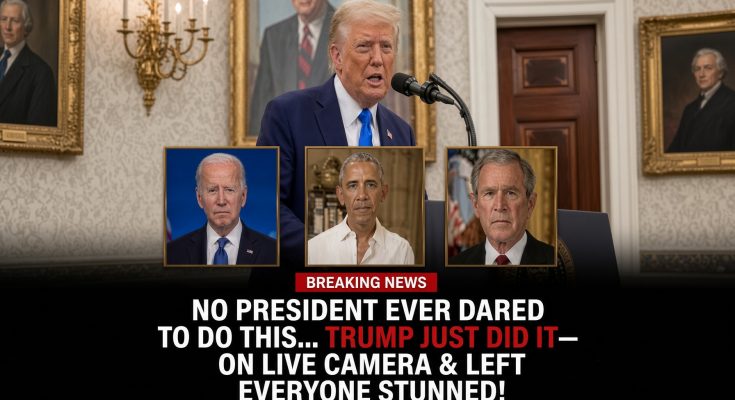
WASHINGTON — A renewed confrontation between President Donald Trump and the news media is fueling a broader debate over the relationship between the White House and the press, with questions surrounding government access, journalistic independence and the constitutional protections afforded to news organizations.
The dispute comes as the Trump administration continues to maintain a direct and highly visible communications strategy, including expanded use of official White House platforms to communicate with the public. The White House launched an official mobile application in March 2026, describing it as a way to provide Americans with direct, real-time information about presidential actions, speeches and administration announcements.
At the same time, disagreements between Trump and traditional news organizations have continued to raise questions about how journalists should operate when relations with the administration become contentious.
The First Amendment and the Press
The constitutional framework for the debate begins with the First Amendment, which states that Congress may not abridge freedom of speech or of the press. The provision is part of the Bill of Rights, ratified in 1791.
That protection does not mean individual news organizations are exempt from criticism, nor does it require government officials to agree with their reporting. Journalists remain responsible for accuracy, sourcing and distinguishing factual reporting from commentary.
But the constitutional protection reflects the longstanding principle that the government cannot simply suppress journalism because officials dislike unfavorable coverage.
The practical relationship between presidents and reporters is more complicated. The White House controls many aspects of presidential access, including briefings, interviews and opportunities for reporters to question administration officials. News organizations, meanwhile, compete for access while attempting to maintain editorial independence.
That tension can become particularly visible during politically polarized periods.
Trump’s Relationship With the Media
Trump has maintained a contentious relationship with portions of the news media throughout his political career. He has frequently criticized news organizations whose reporting he considers inaccurate or unfair, while supporters of the president have argued that major media organizations sometimes approach his administration with a partisan perspective.
Those supporters also point to the growing importance of alternative media, independent journalists, podcasts and social-media platforms. The White House’s own communications strategy increasingly allows administration officials to reach audiences directly rather than relying exclusively on traditional television networks or newspapers.
The administration’s official app, for example, promotes direct access to presidential statements, live briefings, video and other administration material.
Critics, however, argue that direct government communication cannot substitute for independent reporting. Official statements provide the administration’s account of events, while journalists serve a different function by independently verifying claims, interviewing outside sources and scrutinizing government decisions.
Access Versus Independence
The question of access has become particularly important because journalists often depend on government officials for information while simultaneously being expected to challenge those officials.
That creates a potential tension: reporters need access to perform their jobs, but maintaining access cannot become the primary measure of successful journalism.
A newsroom that fears losing access could face pressure to moderate its questions or coverage. Conversely, an administration may argue that reporters who repeatedly publish inaccurate or misleading material should face greater scrutiny.
Those competing arguments are part of a larger transformation in American media.
Traditional newspapers and television networks now operate alongside digital publications, independent commentators, podcasts and social-media creators. Audiences are increasingly able to receive information directly from politicians and government agencies, while journalists compete with those sources for public attention.
A Two-Sided Responsibility
The debate also places responsibilities on journalists themselves.
A free press depends not only on constitutional protection but also on professional standards. News organizations are expected to verify information, correct significant errors, identify sources when possible and clearly distinguish news reporting from opinion.
Government officials, meanwhile, remain subject to scrutiny regardless of whether they agree with the coverage.
Recent developments illustrate why disputes over press access can have consequences beyond individual disagreements. On September 15, 2026, the Associated Press filed a federal lawsuit challenging restrictions on electronic access to certain immigration-related court records, arguing that the limitations interfere with timely reporting and violate the First Amendment. The case demonstrates how questions involving journalism, government transparency and access to public records can move beyond political rhetoric and into the courts.
Constitutional Protection and Political Expression
Ultimately, disagreements between presidents and journalists are not new, and criticism of the press is itself protected political expression.
The central constitutional question is different: whether government action unlawfully restricts the press because of its reporting or viewpoint.
The First Amendment provides the governing principle. It protects freedom of the press while leaving news organizations with the responsibility to exercise that freedom carefully and accurately.
As the Trump administration continues to communicate directly with the public and challenge news organizations it considers unfair, the debate over presidential power, media access and journalistic independence is likely to remain a prominent part of American political life.
Presidents change, news organizations change and media technology continues to evolve. The constitutional protection for freedom of the press remains a central part of the nation’s governing framework.