The Supreme Court has dramatically blocked Donald Trump’s ambitious attempt to restrict mail-in voting, dealing a crushing blow to the president’s election-year agenda just as voting begins in multiple states.
- The conservative-majority court refused to lift an injunction against Trump’s executive order targeting mail-in ballots
- Trump’s SAVE America Act, which aims to overhaul voting laws, remains stalled in the Senate over disenfranchisement concerns
- Mail-in voting currently accounts for roughly one-third of all votes cast across the United States
- Justice Brett Kavanaugh, a Trump appointee, voted against the administration alongside the majority
- Studies show election fraud in mail-in voting is extraordinarily rare—just four cases per 10 million ballots cast
Mail-in voting faces historic challenge as Trump pushes restrictions
In a stunning legal defeat, President Trump’s crusade to overhaul mail-in voting has hit a major roadblock with the Supreme Court’s decisive rejection of his executive order. The ruling, delivered this week, represents a significant victory for voting rights advocates who warned that the president’s restrictions would disenfranchise millions of Americans.
Trump has long railed against mail-in voting despite using it himself during the 2024 election. His administration claimed the system was vulnerable to fraud—assertions that have been repeatedly debunked by election security experts and court-appointed monitors.
What Trump’s executive order actually demanded
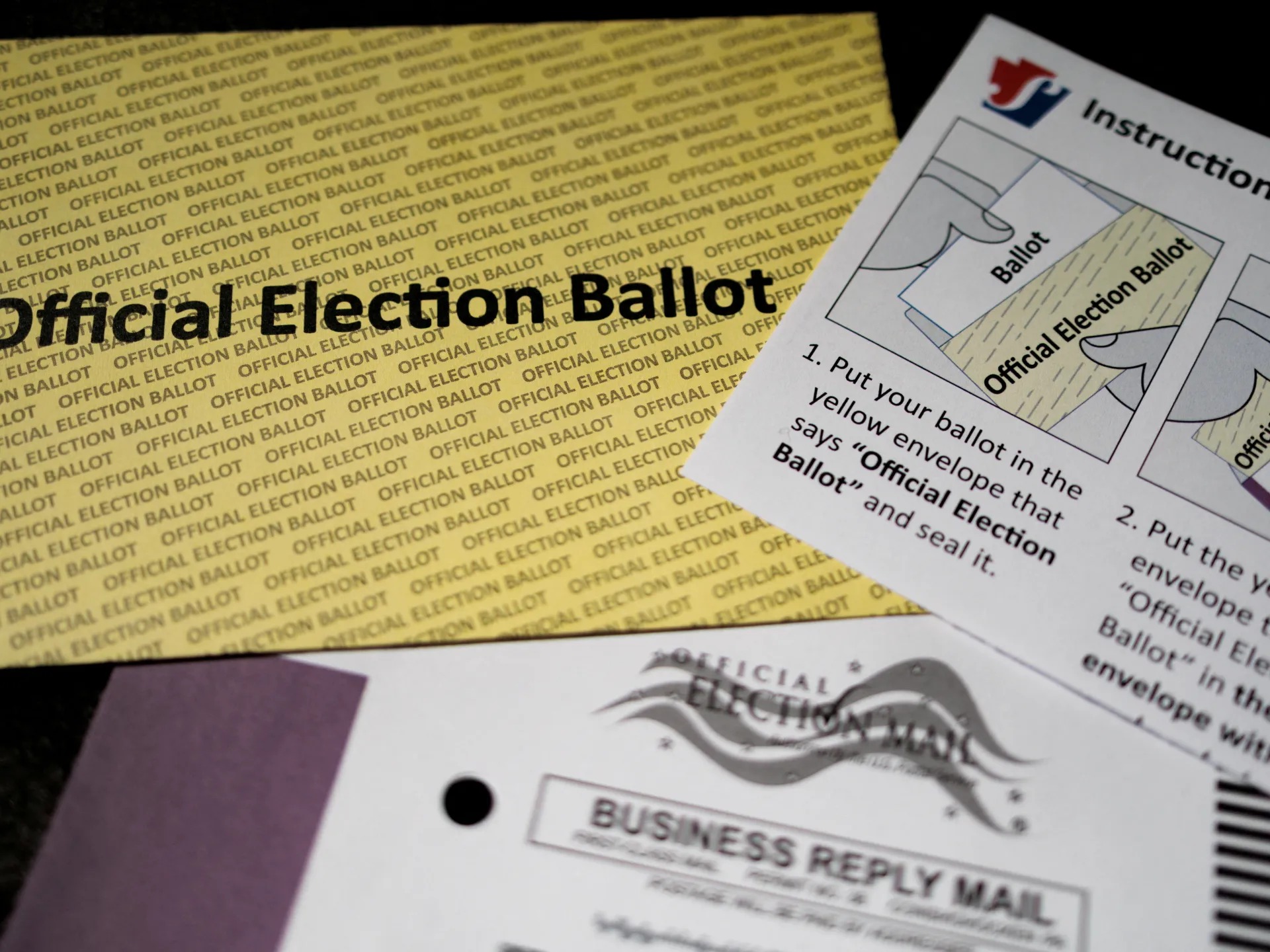
Back in March 2026, Trump signed an executive order that would have fundamentally restructured mail-in voting across America. The directive instructed the U.S. Postal Service to design new ballot envelopes with specialized barcodes, giving federal authorities unprecedented control over state election systems.
‘This move would force all states to adopt a uniform envelope style in an impossibly short timeframe,’ federal sources told MailOnline.
The order went further—it required states to hand over lists of eligible voters to federal agencies including Homeland Security and U.S. Citizenship and Immigration Services. The postal service was then empowered to reject any ballots that didn’t meet the new standards.

The legal battle unfolds across federal courts
Democratic groups and voting rights activists immediately challenged the executive order, sparking an intense legal showdown that stretched from May through August. U.S. District Judge Indira Talwani struck first, issuing a preliminary injunction against Trump’s directive in June.
‘This executive order would likely violate the U.S. Constitution,’ Judge Talwani wrote in her ruling, adding that implementation was practically impossible given the midterm election timeline.
But the Trump administration fought back hard. In a stunning reversal, the conservative-majority Supreme Court overturned Talwani’s decision in late August—though on purely procedural grounds rather than constitutional merit. The court suggested Democrats had sued too prematurely.
Supreme Court’s final ruling protects mail-in voting nationwide
This week’s decision marks the definitive end of Trump’s mail-in voting campaign. In a terse written order offering minimal explanation, the Supreme Court refused to lift Judge Talwani’s original injunction.
The court’s language was unambiguous: Trump’s administration will likely fail in its attempt to restrict mail-in voting before the midterms.
Most remarkably, Justice Brett Kavanaugh—appointed by Trump himself—sided with the majority against the administration. Only Justices Samuel Alito and Clarence Thomas dissented, though Kavanaugh left the door open for future challenges to mail-in voting policies.
Why this ruling matters for millions of American voters
The stakes of this legal battle couldn’t be higher. Mail-in voting has become central to American democracy, with approximately one-third of all votes now cast by mail. Eight states—including Democratic strongholds like California, Colorado, and Oregon—conduct elections entirely by mail.
Election security experts consistently demonstrate that mail-in fraud is virtually non-existent. The Brookings Institution found only four cases of voter fraud per 10 million mailed ballots—a fraud rate of 0.0004 percent.
‘Millions of voters depend on mail-in voting,’ voting rights advocates told MailOnline. ‘Restricting it would create chaos and disenfranchise vulnerable populations including the elderly, disabled, and military service members stationed abroad.’
Trump’s stalled SAVE America Act faces Senate opposition
The Supreme Court defeat comes as Trump’s broader SAVE America Act—which aims to sweeping voting law changes—remains mired in the U.S. Senate. Though the House passed the legislation in February, Senate Democrats and moderate Republicans have blocked its advancement.
Opponents warn that the act would disenfranchise millions of eligible voters nationwide through stringent voter ID requirements and other restrictive measures.
‘The bill is a sledgehammer to voting rights,’ Senate Democrats stated in a joint letter.
The chaos of midterm voting begins across America
The timing of the Supreme Court’s ruling is critical. Several states including Alabama, North Carolina, and Wisconsin have already begun sending out mail-in ballots for the midterm elections.
Had Trump’s executive order been implemented, it would have created unprecedented chaos in the final weeks of voting, forcing election officials to scramble to comply with brand-new federal mandates while ballots were already in circulation.