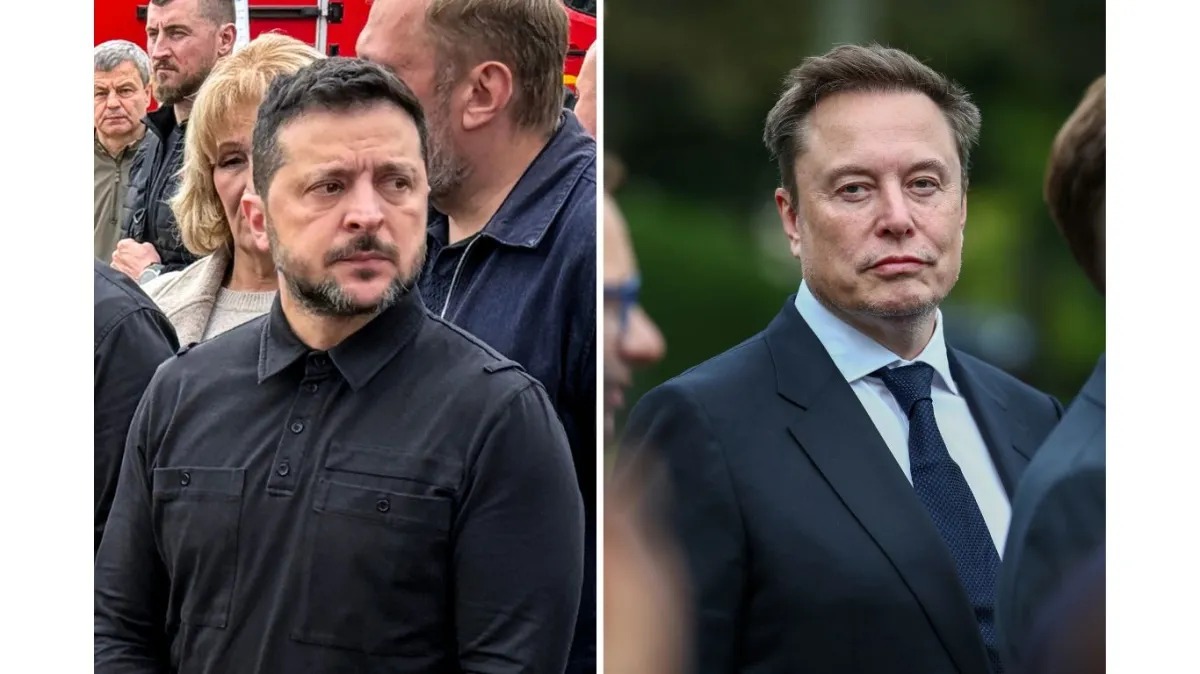
Elon Musk said the U.S. government, rather than SpaceX, was responsible for restrictions that disrupted Ukrainian battlefield communications, saying decisions over the military’s Starshield system were ultimately controlled by President Donald Trump. Musk made the comments Wednesday after Ukrainian officials said restrictions imposed without warning had disrupted military operations against Russian troops.
“Starshield systems are owned and controlled by the US government. Any limits on speed or usage are decided by the US military and ultimately POTUS,” Musk said in a post on X.said
He also drew a distinction between Starshield and Starlink, SpaceX’s commercial satellite internet service.
“Starlink is a commercial service owned and controlled by SpaceX. Usage of Starlink is limited to civilian or defensive activities and cannot be used for offensive military action, as doing so would be inappropriate for a commercial company,” Musk said.
Speed Restrictions Impact Ukraine’s Defense
His comments came as Mykhailo Fedorov, a former Ukrainian defense minister and deputy prime minister, said Starlink connectivity at speeds of up to 160 kilometers per hour, or roughly 100 mph, was being restored.
“Removing Starshield’s speed limit entirely is now critical for Ukraine’s defense,” Fedorov wrote on X, thanking Musk and adding: “We hope for your continued support.”
Earlier Wednesday, Serhii Beskrestnov, adviser to Ukraine’s presidential office, said a “speed limit” had been imposed on terminals used by Ukraine. The country depends heavily on satellite connectivity to maintain battlefield communications and pilot its extensive drone fleets.

Ukrainian officials said the cap was imposed late on Tuesday and had already impacted missions against Moscow.
Newsweek could not independently verify the Ukrainian claims and has reached out to the White House and SpaceX for comment.
Kremlin spokesperson Dmitry Peskov said on Wednesday the Russian government had no information on reported Starlink restrictions in Ukraine.
Musk Points to US Government Control
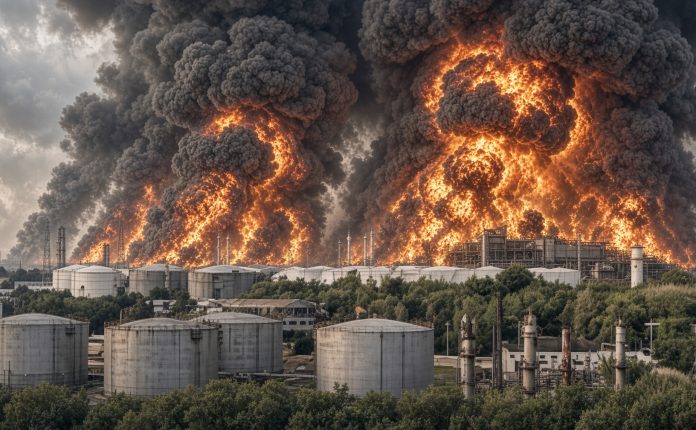
The restrictions attracted particular scrutiny because they came as the U.S. pressures Ukraine to halt its punishing campaign of drone assaults on Russian oil refineries, which have contributed to surging diesel costs and dented Russia’s export-reliant economy.
President Donald Trump has sought to blame rising U.S. diesel prices on Ukraine rather than the U.S.-led war in Iran and Tehran’s effective block on the Strait of Hormuz waterway, which have roiled the world’s energy markets.
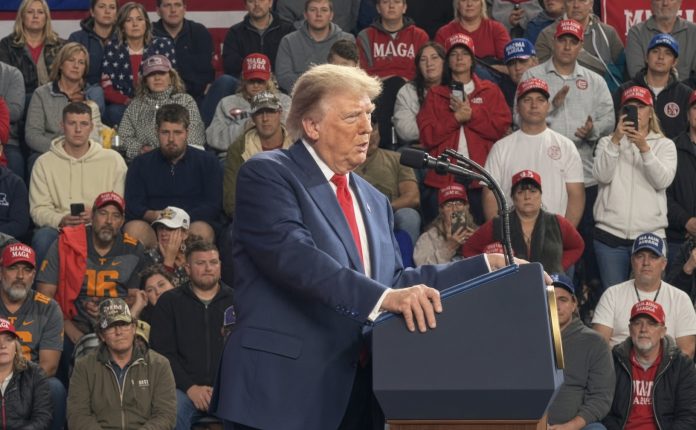
Trump said on Saturday he had told Ukraine’s president, Volodymyr Zelensky, to stop striking Russian oil refineries as Republicans stare down the midterm elections, and bills at the pump for many U.S. consumers remain high.
“Zelensky has gone too far,” Musk said in a post to X on Saturday.
Beskrestnov had said the military-grade service was affected at speeds over 100 mph. Serhii Sternenko, prominent Ukrainian activist and former adviser on drone technology to Ukraine’s Defense Ministry, similarly said “connectivity began to drop” when drones exceeded 100.
“Our defense forces were not given notice of this limit, and this has resulted in the disruption of a number of missions,” Beskrestnov said. Sternenko said a “number of critical missions” had been affected.
Beskrestnov said the change “cannot be a coincidence” and was tied to the “current political situation.”
‘Looks Like an Attempt at Blackmailing’
Before Musk’s explanation, Sternenko had alleged that “SpaceX likely took these measures at the request of the Trump administration,” though he did not provide evidence.
Musk’s subsequent statement disputed SpaceX’s responsibility for restrictions on Starshield while explicitly pointing to the U.S. military and Trump as the authorities responsible for limits on the government-controlled system.
“Politically, it looks like an attempt at blackmailing us into stopping destroying Russian refineries,” said Oleksandr Merezhko, a member of Zelensky’s Servant of the People party and the chair of Ukraine’s parliamentary foreign affairs committee.
“If so, it looks really ugly, because it puts into danger life of our soldiers and our defense capabilities,” Merezhko told Newsweek.
Persistent Ukrainian drone strikes in recent months have targeted Russian oil and gas sites in the hope of cutting off oil revenue used to fund the Kremlin’s war effort.
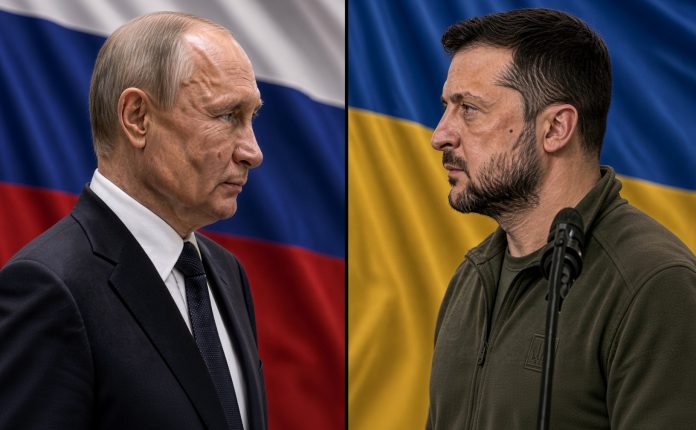
Russia’s president, Vladimir Putin, has said that Ukraine’s drone attacks on oil refineries have cost Moscow roughly 1 percent of its gross domestic product (GDP).
Moscow, in turn, has carried out its own attacks on Ukraine’s power plants, grain-exporting southern ports and its factories to cripple Kyiv’s economy.
Russian Attacks on Ukraine’s Energy Infrastructure
Zelensky said on Wednesday Russian drones and hard-to-intercept ballistic missiles had targeted Ukraine’s energy sector around the capital and in the northeastern Kharkiv region, despite Trump declaring an “energy ceasefire” at the weekend.
Russia’s Defense Ministry said it had carried out a “massive strike” on four power plants in and around Kyiv, as well as an electrical substation. Moscow also said it had attacked two power plants in Kharkiv.

Three people were killed in Kyiv, and hundreds of thousands of people across the country lost access to electricity on Wednesday, local authorities said.
“Such a demonstrative disrespect from Russia toward America has never happened before,” Zelensky said.
There have been no confirmed Ukrainian attacks on Russian oil refineries since Trump announced the “energy ceasefire” on Sunday.
On Tuesday, Zelensky said Ukraine wasn’t alerted by its allies before Russian missile attacks for the second day in a row, raising fears the U.S. may have choked off Kyiv’s access to intelligence.
Ukraine’s systems “detected these missiles only when they were already virtually on approach to Kyiv,” Zelensky said.
Trump said on Tuesday the U.S. was still sharing intelligence with Kyiv, but Ukrainian officials who still remember the U.S. briefly severing its access to American-derived intelligence in early 2025 will likely be wary.
Separately, reduced Starlink access will hurt Ukraine’s ability to intercept Russia’s jet-powered Shahed drones before they hit targets like the Ukrainian capital, Beskrestnov said in a later statement on Wednesday.
Musk has previously said Starlink would never be used as a “bargaining chip” in the conflict, even if he disagrees with Ukrainian policy.
Poland’s deputy prime minister and foreign minister, Radosław Sikorski, said in a message directed at Musk: “Big man, are you playing politics with your products again? As your European customers, we are watching you.”
Sikorski and Musk have repeatedly clashed online over Starlink use in Ukraine.
The Diesel Deal
Trump announced last week that Russia would immediately release an initial 300,000 tons of diesel to the global market, including American consumers, followed by 500,000 tons in November, amid sky-high prices at the pump in the U.S.
Another 1 million tons would later become available, Trump said.
The Treasury also relaxed sanctions on Russian diesel until April 2027 and authorized imports directly into the United States.
The news was met with outrage from both sides of the congressional aisle and was heavily criticized by Zelensky, who called the agreement “absolutely terrible” and a gift to Putin.
The move came less than a month after Trump signed into law a broad sanctions package designed to hack at Russia’s ability to fund its war with Kyiv. The diesel deal was quickly condemned by seven Democrat and Republican senators who said that the Trump administration should “immediately reverse course” after handing Putin a “financial lifeline.”
On Saturday, Trump accused the Ukrainian leader of repeatedly rejecting opportunities to end the war with Russia and defying his warning against striking Russian oil infrastructure.
“I think it’s time for Ukraine to get a new president,” Trump told reporters outside the White House. “I suggest they get a new leader who can make a deal, because he could have made many deals, and for some reason he never does.”
Newsweek’s reporters and editors used Martyn, our AI assistant, to produce this story. Learn more about Martyn here. Contact Newsweek editors on this story: Yannick Demoustier, Edward T. Cummins