
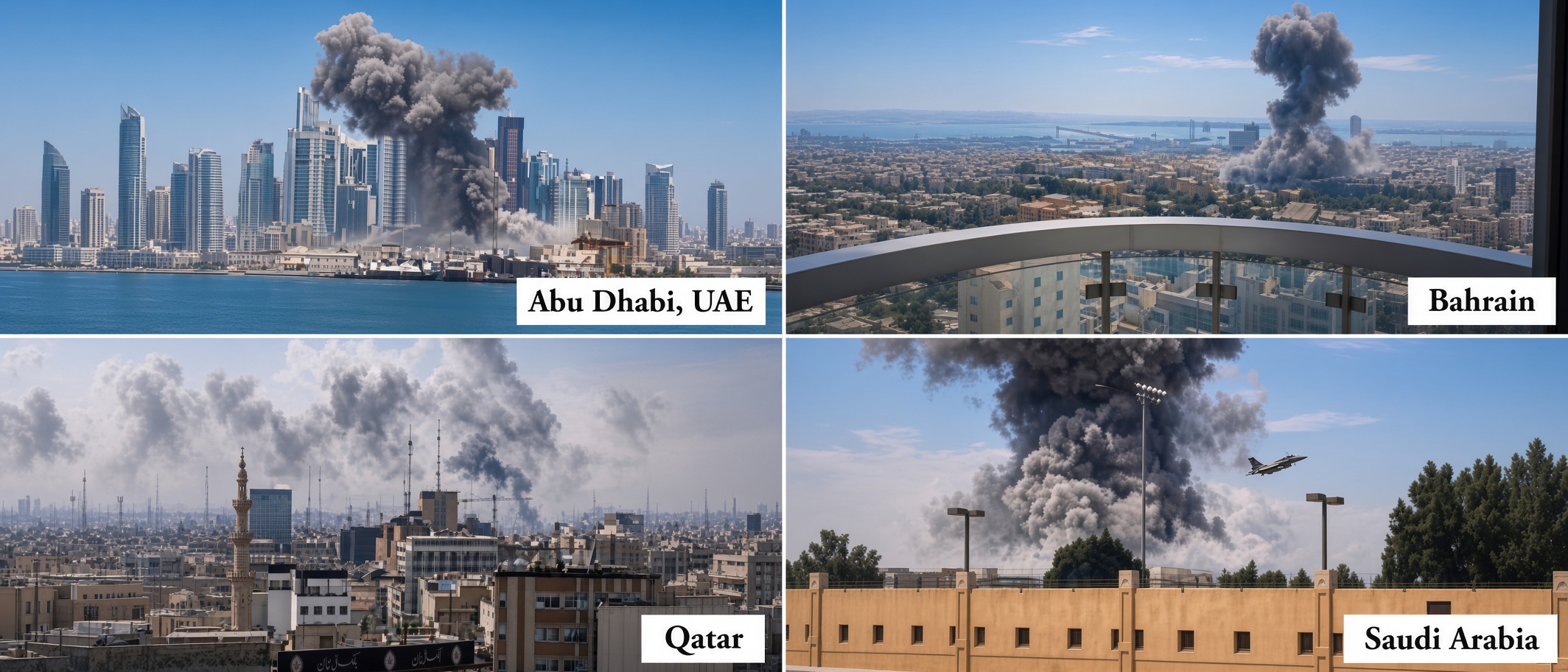
DUBAI — Tensions across the Persian Gulf have intensified as Iran and forces aligned with Tehran have launched a series of attacks and threats against U.S. military interests and American allies, raising concerns about the security of military bases, commercial shipping and critical energy infrastructure.
The latest escalation comes after months of fighting between the United States and Iran and a sharp increase in military activity around the Strait of Hormuz, one of the world’s most strategically important waterways.
Reuters reported that Iran launched missile attacks against U.S. positions in countries including Kuwait, Bahrain, Jordan and Iraq during a recent escalation. Kuwait reported that its air defenses intercepted incoming missiles and drones, while Bahrain said Iranian drones were intercepted. Qatar, which hosts the largest U.S. military installation in the Gulf, also condemned Iranian attacks and warned about their consequences.
The developments have placed Gulf governments on heightened alert as they attempt to protect their populations and critical infrastructure while avoiding a wider regional war.
U.S. Military Bases Remain on Alert
Several Gulf states are home to important U.S. military facilities. Kuwait hosts American forces, Bahrain is home to the headquarters of the U.S. Navy’s Fifth Fleet, and Qatar hosts Al Udeid Air Base, a major American military installation.
Iran has repeatedly threatened U.S. forces and bases in the region as the conflict has intensified. Reuters reported that Tehran has sought to pressure Washington by targeting American military positions while warning countries that cooperate with the United States that they could face consequences.
The recent attacks have also expanded the danger beyond military installations.
Saudi Arabia has faced attacks on energy infrastructure carried out by Iran-backed Houthi forces in Yemen. Reuters reported that a major Houthi assault struck multiple locations in southern Saudi Arabia, injuring dozens of people and damaging oil-related infrastructure. The attacks have added another layer of risk to the region’s energy system.
Strait of Hormuz Becomes a Major Flashpoint
The Strait of Hormuz remains at the center of the crisis.
The narrow waterway connects the Persian Gulf with the Gulf of Oman and is a critical route for global energy shipments. Months of military confrontation have sharply reduced commercial traffic through the strait, while attacks and threats against tankers have increased concerns among shipping companies and energy traders.
Reuters reported that two large tankers carrying Saudi crude were struck by unidentified projectiles while transiting the Strait of Hormuz earlier this month. No casualties were reported, but the incidents demonstrated the continuing danger facing commercial vessels operating in the area.
The United States has continued efforts to maintain maritime access while confronting Iranian attempts to restrict shipping. Iran, meanwhile, has threatened additional measures against vessels using the waterway without Tehran’s permission.
Oil Markets Feel the Pressure
The military escalation is also affecting global energy markets.
Reuters reported that Brent crude prices moved above $100 a barrel as investors reacted to attacks on Saudi energy infrastructure and increasing concerns about disruptions to Gulf oil supplies. The market remains highly sensitive to developments around the Strait of Hormuz because of the waterway’s importance to global petroleum transportation.
Further attacks on energy facilities or commercial shipping could put additional pressure on oil prices and increase transportation and insurance costs.
Risk of a Wider Regional Conflict
The latest developments have raised concerns that the conflict could expand beyond direct U.S.-Iran military exchanges.
Iran has increasingly relied on threats and attacks involving military facilities, shipping routes and allied armed groups, while the United States has continued military and economic pressure against Tehran. Reuters reported that Iran’s attacks and threats could continue to target U.S. and allied bases, vessels and energy infrastructure.
At the same time, Gulf governments face a difficult balancing act. They maintain security partnerships with Washington while seeking to prevent their territory and infrastructure from becoming battlegrounds in the confrontation.
For residents and businesses across the region, the uncertainty is already having consequences. Air-defense activity, shipping disruptions and higher energy prices have added to concerns about what could happen if the fighting intensifies again.
For now, the Strait of Hormuz remains the most important potential flashpoint. Any major disruption there could affect not only the Middle East but also global energy markets and international shipping.
With U.S. forces stationed throughout the Gulf and Iran continuing to threaten American and allied interests, the risk of another escalation remains significant. Regional governments and international markets are watching closely as Washington and Tehran weigh their next moves.