
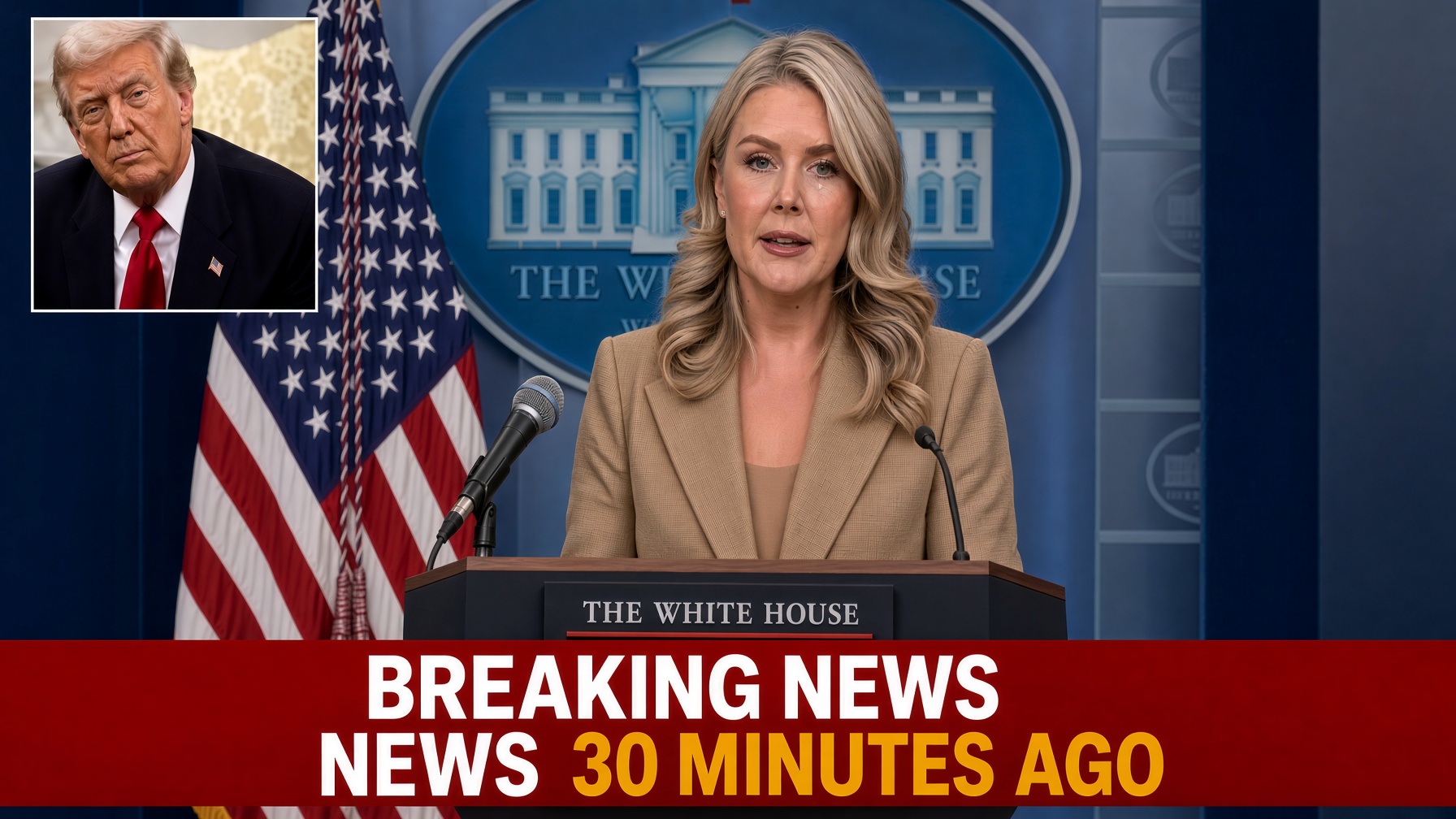
WASHINGTON — White House Press Secretary Karoline Leavitt defended the Trump administration’s approach to press access during a discussion with Axios co-founder Mike Allen, arguing that recent changes to White House media procedures have expanded opportunities for journalists and challenged the dominance of established news organizations.
Speaking at a media event, Leavitt addressed questions about restrictions involving the Associated Press and the composition of the White House press pool. She maintained that the administration’s policies were designed to broaden participation rather than limit coverage of President Donald Trump.
The exchange also highlighted a continuing debate over the relationship between the White House and the news media, including questions about journalistic independence, access to government officials and the role of traditional news organizations in covering the presidency.
Leavitt Defends Changes to Press Pool
Allen asked Leavitt whether she was concerned that restrictions on the Associated Press could affect the historical record, noting that AP photographer Evan Vucci captured the widely recognized image of Trump following the assassination attempt in Butler, Pennsylvania.
Leavitt rejected the characterization of the administration’s policies as restrictions.
“I don’t view them as restrictions,” she said, arguing that the changes were intended to provide access to more outlets, journalists and perspectives.
Leavitt questioned why a single news organization should have a permanent position in the 13-member press pool responsible for covering the president. She pointed out that thousands of outlets hold White House press credentials, while hundreds regularly cover the administration.
“Why should a single outlet have the privilege of being in that 13 person press pool every single day,” Leavitt asked.
She argued that expanding participation would allow organizations such as Axios and other print outlets to gain greater opportunities to cover presidential activities directly.
According to Leavitt, the administration’s approach reflects the changing nature of the media industry, where digital publications, independent journalists and alternative news platforms compete with traditional newspapers and television networks.
Debate Over Government Control of Media Access
The discussion turned to concerns raised by the White House Correspondents’ Association, which has criticized changes involving wire services and the presidential press pool.
Allen cited the association’s position that the government should not control the independent media organizations responsible for covering it. He then asked whether Leavitt agreed with that principle.
Leavitt responded that the board of the White House Correspondents’ Association should not determine which journalists receive access to the Oval Office or travel aboard Air Force One.
She argued that media access should be distributed more broadly among qualified outlets rather than concentrated among a small group of established organizations.
Leavitt also rejected suggestions that the administration was attempting to create more favorable coverage of Trump. She said the White House continued to allow critical news organizations to attend briefings and cover the president.
The exchange reflects a larger dispute over how access to the executive branch should be managed and whether changes to press arrangements strengthen media diversity or create new risks for independent reporting.
Leavitt Highlights Digital Media’s Role
Leavitt emphasized that the Trump administration had adopted a broader approach to communicating with the public, pointing to the president’s use of nontraditional media during his political campaigns.
She argued that the White House should recognize the growing influence of digital platforms and provide opportunities for a wider range of journalists to report on presidential activities.
“It’s not about ideology,” Leavitt said, describing the administration’s stated goal as increasing the variety of outlets with access to the White House.
Her comments come amid ongoing changes in how Americans receive political news. Podcasts, online publications, social-media platforms and independent commentators now play a significant role alongside established news organizations.
Claims About Biden’s Media Engagement
The discussion also included comparisons between Trump’s media availability and former President Joe Biden’s engagement with reporters.
According to the account provided, an Axios report published in July examined Biden’s media appearances and compared them with those of previous presidents. The report reportedly stated that Biden had participated in 164 press conferences and interviews at a comparable point in his presidency, while Trump had participated in 468.
The figures, as presented, would require verification against the original Axios report and a review of how each category was defined. Differences in the types of interviews, press conferences and other media engagements counted could affect the comparison.
The broader debate over presidential media access remains significant. While administrations may differ in their communication strategies, journalists continue to face the challenge of reporting independently while maintaining access to officials and government information.
As the Trump administration reshapes its relationship with the press, questions about transparency, fairness and media independence are likely to remain central to discussions about presidential coverage and public accountability.
The information in this report is based on the account provided and should be independently verified against the original interview, official statements and the cited Axios report.