
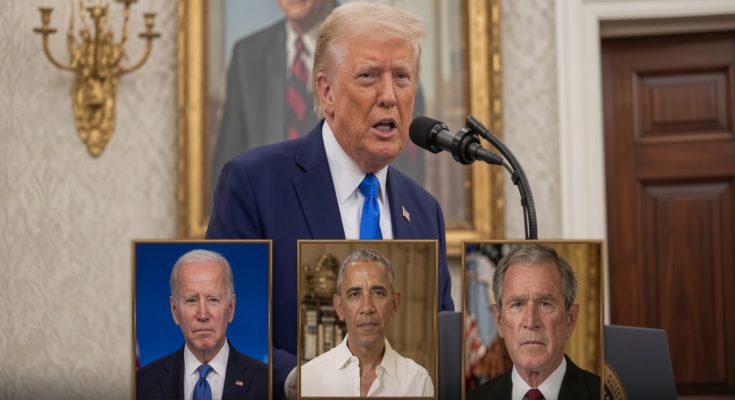
WASHINGTON — A renewed confrontation between President Donald Trump and the news media has intensified a longstanding debate over the role of journalism in American democracy, particularly when political leaders challenge the independence and authority of major news organizations.
The dispute has raised a broader question for journalists, constitutional scholars and media observers: How should the press respond when those in power attempt to influence the way news organizations operate, while still maintaining access necessary to report on government?
Trump has maintained a contentious relationship with much of the mainstream media throughout his political career. Supporters argue that his criticism reflects legitimate concerns about perceived bias, inaccurate reporting and the influence of traditional media institutions. Critics, however, warn that persistent political pressure on news organizations can create an environment in which journalists become reluctant to aggressively investigate those responsible for making government decisions.
The disagreement reaches beyond any single president or news organization. At its core is the constitutional principle of a free press and its role in holding public officials accountable.
The First Amendment protects freedom of the press as a fundamental component of American democracy. Independent journalists are expected to examine government actions, investigate allegations of wrongdoing and provide citizens with information necessary to evaluate elected leaders and public policy.
That responsibility becomes particularly important during periods of intense political polarization, when public confidence in institutions is already deeply divided.
A Changing Media Environment
The debate is unfolding as the American media landscape undergoes significant transformation. Traditional newspapers and television networks now compete with digital publications, independent journalists, podcasts, video platforms and social-media commentators.
Trump’s supporters frequently argue that established news organizations should no longer receive special treatment or unquestioned credibility. They contend that alternative media outlets deserve greater access and that audiences should be able to evaluate competing accounts for themselves.
Critics counter that expanding the number of voices does not eliminate the need for professional journalism. They argue that news organizations must continue investing in investigative reporting, verification and accountability regardless of whether their coverage is politically popular.
A free press, however, also carries responsibilities.
Journalists must distinguish verified reporting from commentary, correct errors, disclose relevant conflicts and resist political pressure from all sides. Independence requires scrutiny of government officials regardless of party affiliation.
Access Versus Independence
One of the most difficult challenges facing political journalists is the relationship between access and independence.
Government access can provide reporters with important information and opportunities to question officials directly. But critics warn that access should never become a substitute for independent reporting.
If journalists fear losing access because of aggressive questioning or critical coverage, they may become less willing to pursue difficult stories. Likewise, if government officials selectively reward favorable coverage, the relationship between political power and the press can become increasingly complicated.
That is why press organizations may face pressure to defend access and journalistic independence collectively when disputes arise.
The issue is not necessarily whether journalists should support or oppose Trump. Rather, the larger question concerns whether reporters can continue asking difficult questions of any administration without fear of retaliation.
Presidents come and go, and political majorities change. The constitutional protections surrounding freedom of the press remain.
For supporters of a free press, that principle is central to democratic accountability: government officials should be answerable to independent scrutiny, even when the questions are uncomfortable or the resulting coverage is unfavorable.
The debate over Trump and the media is therefore part of a much larger national conversation about political power, journalistic responsibility and the constitutional role of an independent press in American democracy.