
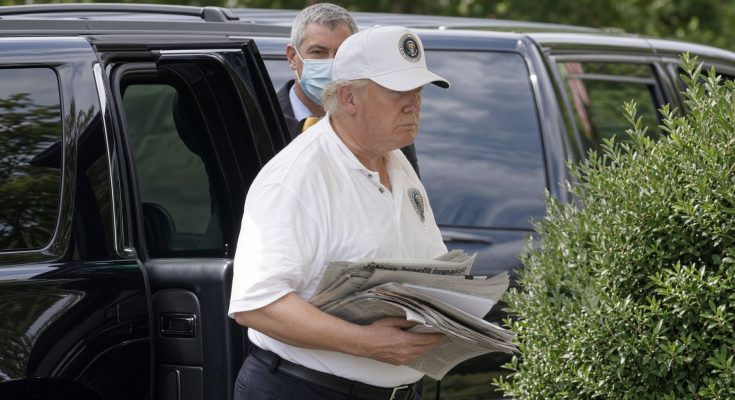
WASHINGTON — Unverified reports of a late-night sighting of Donald Trump have ignited a surge of online speculation, demonstrating how rapidly digital narratives can take hold in the absence of official confirmation.
According to posts circulating across social media platforms, the former president was allegedly observed walking alone shortly after midnight. Accounts described him wearing a baseball cap and operating without the highly visible Secret Service detail, press corps, or formal motorcade that typically accompanies high-profile political figures.
Public scrutiny quickly converged on a small object reportedly held in his hand, which observers claimed reflected ambient street lighting in grainy footage and photographs. Because federal authorities and official representatives issued no immediate statement, internet users swiftly moved to fill the information vacuum with competing interpretations.
The Mechanics of Digital Rumors
The episode highlights the speed with which unconfirmed claims can transform routine observations into viral political commentary. Within hours of the initial posts, online discussions fragmented into opposing theories:
Conspiratorial Framing: Some commentators insisted the late-night outing and unidentified object signaled a significant, unannounced development or secret meeting.
Skeptical Rebuttal: Other analysts and observers dismissed the footage as entirely ordinary, suggesting the object was merely a standard personal item, such as a mobile device or keys.
Verification Gaps: Independent news outlets were unable to immediately confirm the timestamp, exact location, or authenticity of the circulating imagery.
Despite the intense digital discourse, little verifiable factual data emerged to clarify the circumstances of the event. Ultimately, the rapid spread of the story underscored how public reaction often outpaces established facts when public figures are involved.
Ambiguity, Projection, and Public Scrutiny
Security experts and media analysts note that high-visibility figures exist in a landscape where routine personal actions—such as taking a walk or maintaining a low profile—are routinely subjected to intense public analysis. When verifiable details are scarce, audiences frequently project their existing political beliefs, anxieties, or expectations onto incomplete evidence.
In this instance, the overarching story shifted from the physical reality of the reported walk to the broader dynamics of modern media consumption. A quiet moment quickly became digital content, and a grainy image expanded into a national conversation.
The incident serves as a case study in how ambiguity functions in the digital age. In a media environment driven by rapid commentary, incomplete information rarely remains neutral; instead, it becomes a canvas for public projection, proving that the reaction to an event can frequently eclipse the event itself.